School Bus Applique: A Designer Review for Business Merch
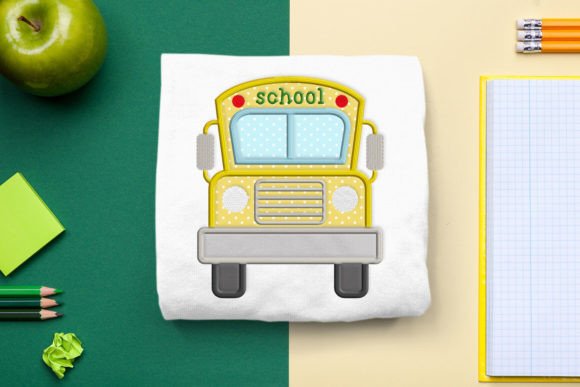
As an embroidery designer who frequently consults with small businesses on merchandise development, I approach every new machine embroidery design with a critical eye toward production efficiency and brand longevity. When reviewing the School Bus Applique for potential commercial use, my first impression is one of nostalgic professionalism. The front-view perspective creates an immediate, friendly connection that feels classic rather than cartoonish. For businesses in the education sector, childcare industry, or family-oriented retail, this design offers a bold visual anchor. However, translating a seasonal Back To School motif into year-round branded assets requires careful technical evaluation. This review breaks down how this specific appliqué file performs when adapted for patches, uniforms, and retail merchandise.
Visual Personality and Brand Alignment
The aesthetic of the School Bus Applique leans heavily into Americana and community trust. Unlike side-profile bus designs that can look elongated and lose detail at smaller sizes, the front view provides a compact, symmetrical footprint. This geometry is crucial for brand identity. Symmetry reads as professional and intentional on custom apparel, whereas asymmetrical novelty designs can sometimes appear amateurish on staff uniforms.
For a local bakery, bookstore, or children’s boutique, this design signals a welcoming atmosphere. It works exceptionally well as a secondary logo element or a seasonal accent. If your business serves families, integrating this embroidery file into your product line bridges the gap between commercial branding and handmade warmth. The placement of the word "school" on top of the bus acts as a natural header, making it easy to customize or pair with your own business name below the vehicle without disrupting the composition.
Technical Performance in Commercial Embroidery
From a digitizing and production standpoint, the note that steps are separated by color changes is significant for commercial embroidery workflows. In high-volume production, such as outfitting a daycare staff or creating event merchandise, machine stops cost time. Because this design explicitly advises against color sorting or combing, operators must respect the digitizer's intended stitch-out sequence. This separation likely exists to ensure proper fabric tacking and alignment before satin borders are applied. Ignoring this could lead to registration issues where the outline does not perfectly match the fabric edge.
Appliqué is generally superior to full-fill embroidery for small business merch because it reduces stitch density. Lower density means less puckering on lightweight fabrics like tote bags or performance tees. It also results in a softer hand-feel, which is essential for children’s clothing or comfortable staff aprons. However, because the design relies on fabric contrast, you must verify that your chosen thread colors complement the appliqué material. High contrast between the fabric and the satin stitch border is necessary for legibility, especially if the item will be photographed for social media or e-commerce listings.
Ideal Applications for Small Business Merchandise
Based on the structural integrity of a front-view bus, this design excels in specific applications:
- Embroidered Patch: The compact shape makes this ideal for PVC or traditional twill patches. Patches allow you to sell the design as an add-on product or create limited-edition collectibles without committing to pre-embroidered inventory.
- Tote Bag Design: Canvas totes are a staple for bookstores and markets. The lower stitch count of appliqué prevents the bag from becoming stiff or heavy, maintaining the utility of the item.
- Apron Embroidery: For cafes or art studios catering to kids, placing this design on the chest pocket area of an apron adds personality without interfering with the garment's function.
- Cap Embroidery: Front-view vehicles often fit better on curved cap fronts than horizontal scenes. The vertical orientation utilizes the limited hoop space of headwear more effectively.
When used as part of a cohesive collection, this digital embroidery file helps establish visual consistency across different product types. A customer buying a back-to-school bundle appreciates seeing the same high-quality motif on a shirt, a bag, and a hat.
Critical Limitations and Production Cautions
While versatile, the School Bus Applique has limitations that business owners must acknowledge. The text element on top of the bus is the primary failure point during resizing. If you attempt to shrink this design for a toddler’s polo sleeve or a tiny lapel pin, the lettering may become illegible or cause thread breaks due to excessive density in a small area.
Additionally, consider the fabric texture of your base material. Appliqué requires a smooth surface for the satin stitch to lock down properly. Highly textured fabrics like terry cloth, fleece, or pique knit can swallow the tack-down stitches, causing the raw edges of the appliqué fabric to fray after washing. For these materials, you may need to use a water-soluble topping or select a different design entirely.
Dark uniforms also present a challenge. If the bus body is yellow fabric but placed on a navy shirt, ensure the outline stitch is dense enough to prevent the dark background from bleeding through. Always test on the actual production fabric, not just a sample swatch, as stabilizer requirements change based on garment weight and stretch.
Designer Notes for Professional Results
To maximize the ROI of this asset, follow these professional guidelines before listing products or starting production runs:
- Verify Hoop Size Compatibility: Before purchasing or stitching, confirm the physical dimensions of the design against your available hoops. Do not assume standard sizing; check the specific file metadata.
- Create a Printable Mockup: Use software to overlay the design onto photos of your actual blank merchandise. This helps visualize scale and placement relative to seams, pockets, and zippers. Share this printable mockup with clients for approval to avoid costly re-dos.
- Test Stitch-Out is Mandatory: Run a sample using the exact stabilizer and fabric combination intended for the final product. Inspect the registration of the satin border over the cut edge. Since color sorting is prohibited, pay attention to how the machine handles the transition between the placement line and the final border.
- Check Licensing Terms: Ensure your purchase includes rights for finished product sales. Some files are restricted to personal use only. Confirming commercial licensing protects your business from intellectual property disputes.
- Evaluate Thread Contrast: Test the design in black and white grayscale first. If the design loses definition without color, it may not photograph well for online listings. Adjust thread selection to ensure the design pops even in low-light product photography.
Enhancing Customer Trust Through Quality Execution
Ultimately, the value of the School Bus Applique lies in its execution. A poorly stitched design damages brand identity faster than no design at all. When customers see clean satin edges, precise text, and stable fabric application, they associate those qualities with your business's overall attention to detail. This perception directly influences perceived product value and buyer engagement.
For Etsy sellers and handmade brands, this design serves as excellent design assets for seasonal pushes. By treating this file as a professional component of your manufacturing process rather than just a cute graphic, you elevate your merchandise from simple craft to premium branded goods. Whether used for staff uniforms, customer gifts, or direct retail sales, respecting the technical nuances of this appliqué ensures your handmade product stands the test of both wear and market trends.