Smiling Globe: A Designer Review for Business Merch
As an embroidery designer who specializes in commercial branding and small business merchandise, I approach every new machine embroidery design with a critical eye. When evaluating the Smiling Globe design, my primary focus is not just on its aesthetic appeal, but on its functional viability for production environments. While this design is categorized under Back To School and described as radiating happiness and curiosity, it holds significant untapped potential for creative studios, bakeries, florists, and handmade brands looking to inject warmth into their brand identity. This review analyzes the technical performance and commercial application of Smiling Globe for professional use.
Visual Personality and Brand Alignment
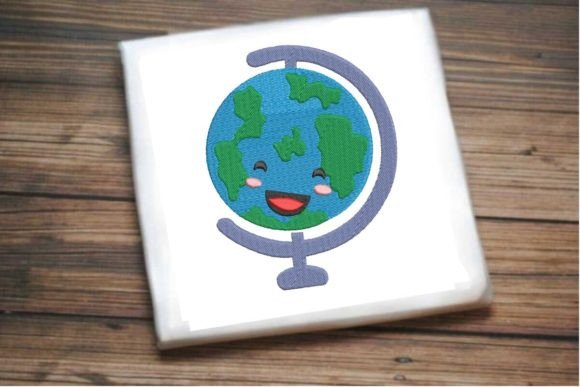
The first impression of Smiling Globe is undeniably friendly and approachable. For a small business owner, this visual tone is a strategic asset. In an era where consumers crave connection, a smiling globe icon communicates global awareness paired with local warmth. It avoids the sterile corporate look while maintaining enough structure to be taken seriously as a logo accent or mascot.
For a boutique or creative studio, this design bridges the gap between playful and professional. It suggests that your business is welcoming and optimistic. However, because the design features facial details and curved lines, it requires careful handling to ensure it does not look juvenile when applied to adult-oriented custom apparel. The key to leveraging this design for business is context; placed on a canvas tote or a denim apron, it reads as artisanal and charming. Placed incorrectly on formal wear without adjustment, it may lose its professional edge. As a designer, I see this as a versatile asset for businesses that want to appear accessible rather than exclusive.
Commercial Applications Beyond the Classroom
While the product description highlights school tools, the circular geometry of a globe makes it an ideal candidate for various small business merch applications. Circular designs are naturally suited for specific placement areas that rectangular logos cannot occupy effectively.
- Embroidered Patches: The round shape of Smiling Globe is perfect for patch production. Whether you are creating morale patches for staff or branded badges for customers, the self-contained border reduces fraying risks during cutting and sealing.
- Apron Embroidery: For bakeries, florists, and pet groomers, this design works beautifully as a chest pocket accent or centered bib logo. The friendly expression aligns perfectly with service-oriented industries where customer interaction is constant.
- Tote Bag Design: Canvas totes are a staple for Etsy sellers and market vendors. Smiling Globe provides a high-impact center focal point that remains legible even from a distance, making it excellent for mobile advertising at craft fairs.
- Cap Embroidery: The compact nature of a globe allows for centered front placement on caps without distorting over the seam, provided the sizing is adjusted correctly.
- Product Packaging: Use this design on fabric dust bags, reusable gift wraps, or linen tags to elevate the unboxing experience of a handmade product.
Technical Considerations for Production
A cute design can quickly become a production nightmare if technical constraints are ignored. When digitizing or purchasing a digital embroidery file like Smiling Globe, you must evaluate stitch density and detail retention. Facial features on a globe require precise registration. If the eyes or mouth are too small, they may disappear or cause thread breaks on textured fabrics.
I recommend testing this design on scrap material before committing to a full run. Pay close attention to the stitch density around the smile. High-density satin stitches used for outlines can cause puckering on lightweight fabrics if not properly stabilized. Conversely, if the fill is too sparse, the fabric grain might show through, reducing the perceived quality of the finished product.
When planning for cap embroidery, verify that the curve of the globe matches the curvature of the cap front. Flat digitized circles often distort on curved surfaces. You may need a specialized cap version of the file or significant compensation adjustments. Similarly, for dark uniforms, ensure the thread colors provide sufficient contrast. A yellow smile on a gold shirt will vanish; outline adjustments or color blocking may be necessary to maintain visibility.
Strategic Placement and Sizing Limitations
Not every garment is suitable for Smiling Globe. As a reviewer, I advise caution when applying this design to highly textured surfaces like terry cloth or thick fleece without a topping. The fine details of the face can get lost in the pile. For these materials, consider simplifying the design or increasing the overall size to preserve clarity.
Sizing is another critical factor. There is a minimum threshold for facial details in embroidery. Before ordering or stitching, confirm the smallest viable size for this specific embroidery file. Shrinking a complex design below its safe limit results in needle penetrations overlapping, leading to holes or thread nests. Always check the recommended hoop size and dimensions provided by the digitizer. Do not assume standard resizing software can handle intricate facial expressions without re-digitizing.
Furthermore, consider washability. If this design is intended for staff uniforms or children’s merchandise that will undergo frequent laundering, ensure the stitch type is durable. Satin stitches are prone to snagging; tatami fills or running stitch outlines often hold up better in high-wear commercial environments.
Enhancing Value Through Professional Execution
Using Smiling Globe effectively can significantly boost customer trust and recognition. Consistency is paramount. If you use this design on an apron, ensure the same thread colors and sizing ratios are used on your tote bags and packaging. This visual consistency reinforces brand identity and makes your business look established and intentional.
Before launching any new merchandise line featuring this design, create a printable mockup for client approval or internal review. Seeing the design digitally placed on a garment helps identify proportion issues that aren't obvious in isolation. Compare Smiling Globe beside your other design assets to ensure stylistic cohesion. Does it match the weight and vibe of your existing text logos? If not, you may need to adjust the thread sheen or add complementary elements to tie the collection together.
Essential Pre-Production Checklist
To ensure Smiling Globe performs as expected in a commercial setting, follow this practical checklist before mass production:
- Verify Licensing: Confirm that the commercial embroidery license permits use on merchandise for sale. Personal use licenses do not cover branded business goods.
- Test Stitch-Out: Always run a physical test on the actual fabric and stabilizer combination you intend to use. Digital previews cannot replicate tension issues.
- Check Contrast: Print a black and white version of the design to test value contrast. If the design relies solely on color differences without value variation, it may fail on certain backgrounds.
- Assess Fabric Texture: Match the design complexity to the fabric. Smooth twills and canvases are ideal; heavy knits may require modification.
- Confirm Dimensions: Measure the physical stitch-out against the intended placement area. A 3-inch globe looks vastly different on a child's pocket versus an adult tote bag.
- Evaluate Wash Fastness: If selling to families or using for staff, wash the test sample three times to check for shrinkage or thread distortion.
Smiling Globe offers a unique opportunity to soften the commercial edge of small business branding while maintaining professional appeal. By treating this machine embroidery design with the same technical rigor as a corporate logo, you can transform a simple back-to-school motif into a powerful tool for customer engagement and brand loyalty. Whether used on an apron, a patch, or a premium tote, success lies in respecting the technical limits of the medium and aligning the design’s cheerful personality with your business goals.